
Charlotte Court Docket Searches
Charlotte offers no separate municipal-court docket portal. When a Charlotte citation or misdemeanor turns into a court case, the trail runs through the county's Public Case Search page. Pick the 56A District Court option there. The city's code and police pages can tell you which local rule applies. They can also show which office issued the ticket. What they cannot show is a hearing date, a disposition, or any register of actions.
Inside the D56A MiCOURT search, type a party name or a court case number. Remember that a Charlotte court docket result is informational, not a certified court record. A blank result usually has a simple fix. Check the spelling. Drop an extra filter. Confirm the matter was actually filed with the court, then reassess. If Charlotte information points to a real filing, but the online result stays empty, call the 56A Traffic or District clerk next.
- Check the Charlotte citation or ordinance information for the issuing agency and any case or ticket number.
- Open the county Public Case Search page and select the 56A District Court search for a Charlotte court matter.
- Search by last name or by the displayed year, number, and type fields when a court case number is known.
- Open the result to read its court, status, next hearing, and case-event history.
- Call the responsible county court department before acting on a date, balance, or court-record request.
Charlotte Police Citation Routing
A Charlotte ticket usually starts with the Charlotte Police Department. The city lists a police business line at 517-543-1552 and a non-emergency line at 517-541-0767. Call those numbers with your question. Ask how an officer issued a citation. Ask where a local parking question should begin. But the police do not hold the court file. Once a Charlotte citation reaches 56A District Court, the record lives with the court. It does not live with the department.
From there, the court side has its own path. For traffic questions, the county Traffic department can be reached at 517-543-3359. A public MiCOURT result can display the case status and its events. Hang on to the paper ticket or receipt, along with any court number on it. That paper is the bridge between a police contact and the later court record.
Note: A police inquiry and a 56A court case connect only later. The link forms after the citation or charge has actually entered the county court system.
Inside the Charlotte Municipal Court
Charlotte runs no municipal court of its own. There is no separate city docket, city calendar, or city certified-copy counter to search. Instead, Charlotte court matters land in Eaton County's 56A District Court. That court handles traffic, civil infractions, parking, ordinary misdemeanors, small claims, and other district filings.
That does not make city offices useless. City Hall at 111 E Lawrence Avenue, the Police Department, and the city code archive can answer questions about local ordinances. They can also explain where a citation came from. The 56A court then supplies the judicial layer: hearing dates, case events, dispositions, and the official copy process. A felony can start at the District Court's preliminary stage. It can move to the 56th Circuit Court after a bindover.
So the Charlotte path runs in two steps. Get city enforcement or code information first. Then pull the county court record once something is filed. A city clerk's answer about a ticket is never proof of the court's current setting.
Charlotte Ordinance Court Records
The official Charlotte City Code and its ordinance archive cover the city charter, its ordinances, and recently published ordinance items. These are law and policy sources, nothing more. Neither one is a Charlotte court docket. An ordinance number does not automatically become a court case number.
For a Charlotte ordinance matter, that split matters. Read the cited code provision on the city source first. Then search the county record by party name or court number if the matter was filed. The court result may show a charge or civil infraction, hearings, case events, a disposition, and financial fields. It will not reproduce every city code page or police document.
For the official text, Charlotte's ordinance archive publishes the city's enacted ordinances directly.
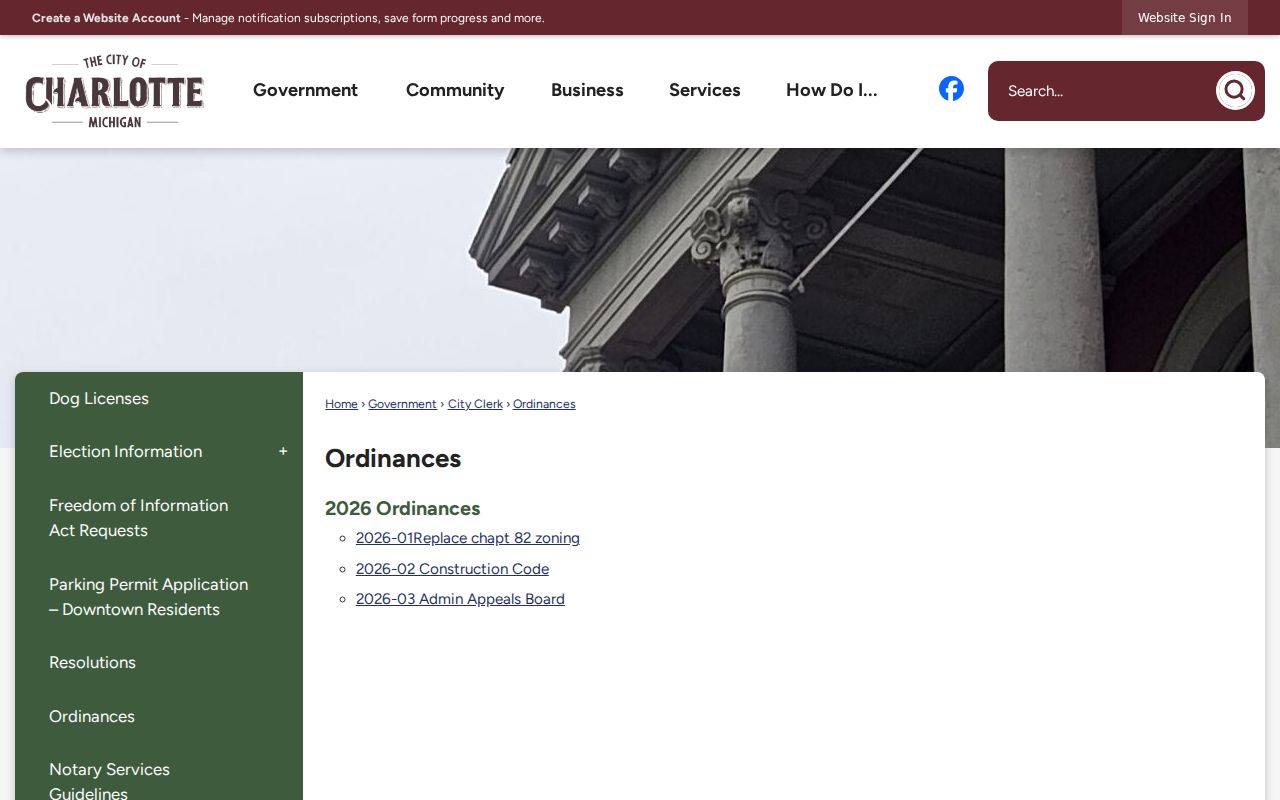
City code pages explain local rules. They don't hold the county court record, so a Charlotte case that gets filed lives in the Eaton County docket, and that's the record to pull.
Finding Charlotte Court Dates
Skip the city-code pages when you need a court date. The county court docket is what confirms a Charlotte hearing. MiCOURT case details can list a next hearing plus the case-event history behind it. The county's daily calendar and MiCOURT CourtDisplay work well as cross-checks. Eaton County cautions that some cases never make the daily calendar. A notice of hearing, or a call to the court's department line, is the surest confirmation. Use it before any required appearance.
| Case court | Shows whether the Charlotte matter is in D56A, Circuit, or Probate. |
|---|---|
| Next hearing | May list a date, time, officer, location, and hearing description. |
| Case event | Records a filing, notice, hearing, order, continuance, or disposition. |
| Case status | Indicates an open, disposed, closed, or other system status, not a substitute for reading events. |
| Notice of hearing | Controls for a party’s appearance if an online display conflicts or has not updated. |
For a D56A traffic matter tied to Charlotte, call 517-543-3359. Criminal questions go to the District Criminal line at 517-543-4029. Have the case number or full party name ready before asking the Charlotte court about a date.
Charlotte Parking Ticket Records
Parking in Charlotte runs through the city, not the courthouse. The 2025 overnight-parking program belongs to the Police Department. It takes citation questions at 111 E Lawrence Avenue or 517-543-1552. Its six-month parking permit costs $30. So a parking question can start and end with city police. No court docket is involved at all.
That changes once a citation is filed as a case. Then the record sits in the county path. Search D56A MiCOURT for case information. Or call the county Traffic office about a setting, disposition, balance, or official copy. Keep the three paths straight. A city permit record, a police citation inquiry, and a court docket hold different facts. For the citation side, Charlotte Police information is the page that lists the department's contact details.
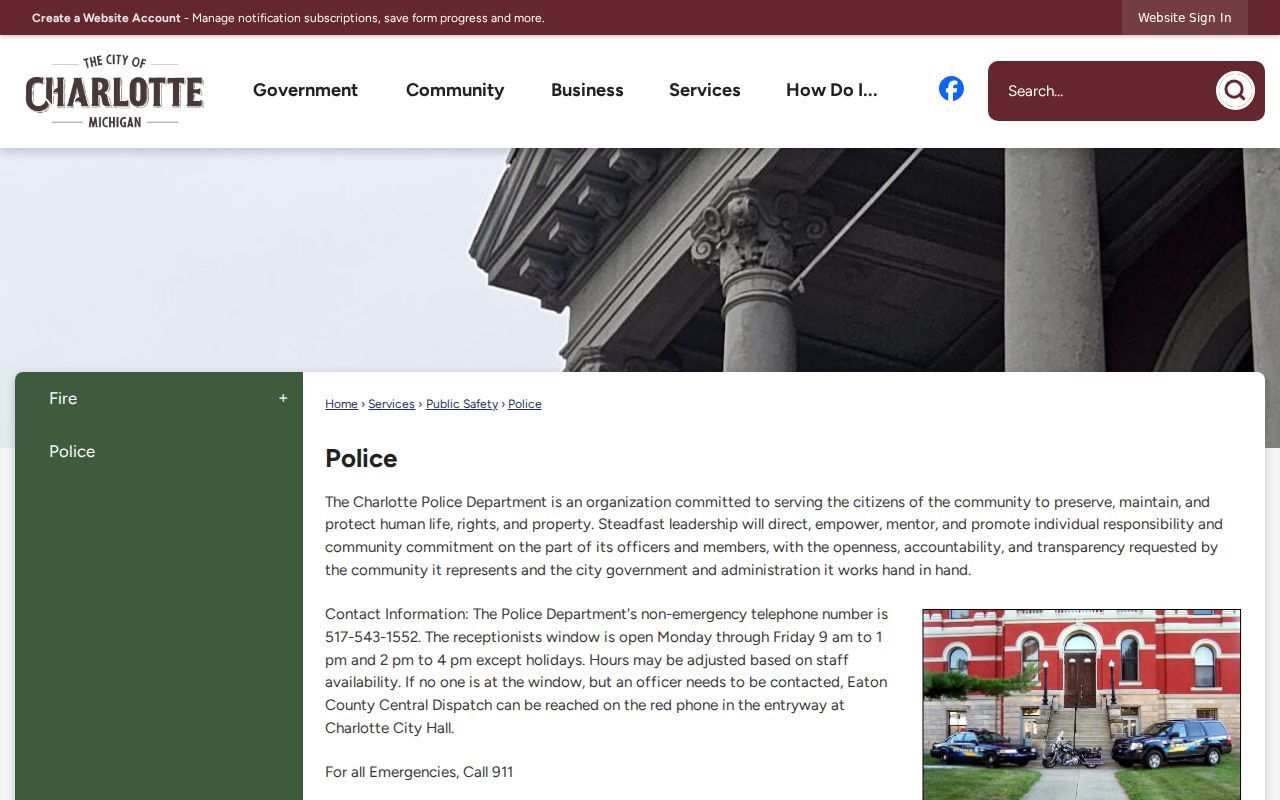
Call that local channel for questions about where a citation came from. A filed Charlotte court record, though, stays with the county court.
Charlotte Traffic Ticket Lookups
A Charlotte traffic ticket that lands in 56A District Court has two useful stops. D56A MiCOURT gives the public case layer. The Traffic department confirms details directly with the court. To search by name, enter Last Name or Business. First name, middle name, and birth year are optional. The case-number route uses Year, Number, and an optional Type control. Skip wildcard characters, since the public search rejects them.
A Charlotte result can list a charge or civil infraction, the filed date, status, hearing, case events, disposition, and balance when the record makes those fields public. One caution: a result does not prove a payment processor has posted your payment. Eaton's traffic payment information warns that online posting can take 48 to 72 hours. For a same-day payment-status question, the Traffic Clerk is the right source.
Charlotte MiCOURT Record Fields
MiCOURT is the statewide search layer. It sits behind any Charlotte case filed in an Eaton County court. A result row can show the court and the case number. Parties or case style, case type, filed date, and status can also appear. Open the record to reach the case details and full event history. That path beats guessing at a court case from a Charlotte ordinance page.
| Charlotte court search field | Use | Local caution |
|---|---|---|
| Last Name or Business | Required public name-search entry | Use at least two characters and no wildcard. |
| Year / Number / Type | Find a known court case | Use the court number as shown, not a city ordinance number. |
| Status and category | Narrow open, disposed, traffic, criminal, civil, or probate results | Categories do not make restricted cases public. |
| Filed or offense date | Narrows common-name results | An omitted date does not prove that no Charlotte case exists. |
Charlotte’s City Code page is depicted in the assigned image below.
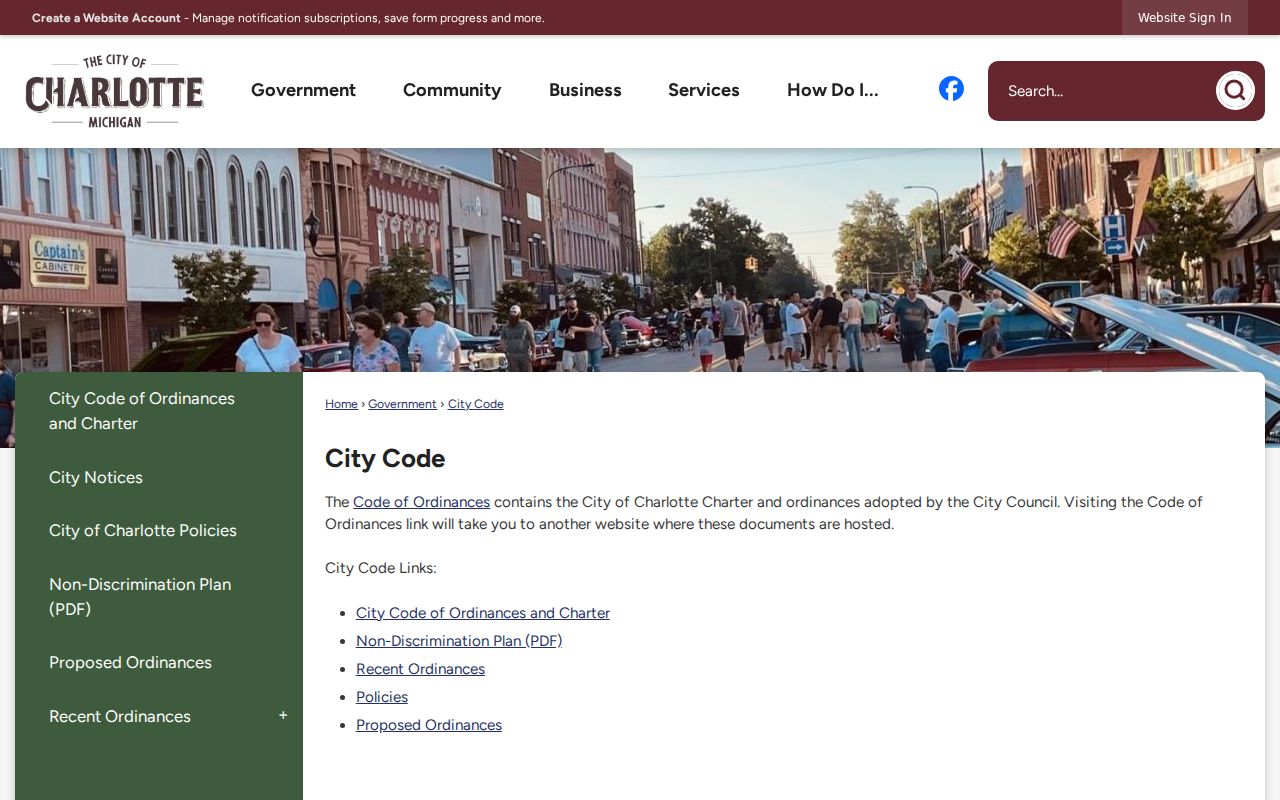
Read the City Code for the local rule itself. Then turn to MiCOURT or the clerk for the Charlotte court record it produced.
How Charlotte Cases Reach County
Judicial action never happens at a city counter. A Charlotte case starts with police or a code contact. But the court docket lives at the county level. Traffic, parking, civil-infraction, and ordinary misdemeanor matters are generally followed in 56A District Court. A felony may show a preliminary examination in D56A. A bindover or transfer then moves it to the 56th Circuit Court. Civil disputes split by amount. District Court handles claims up to $25,000. Circuit Court takes ordinary claims above that line.
Docket flow: Charlotte city office or police contact › 56A District Court when filed › 56th Circuit Court after a bindover, appeal, or qualifying Circuit matter.
Search the court named on the case record. A D56A docket entry reading bindover, transfer, or appeal means you should check a C56 record too. The county-level case search lets you pick the correct court before requesting an official copy.
Charlotte Court Record Copies
An online result is not an official Charlotte court record. For a D56A matter, fill out the District Court Record Request form with your contact information, a case number, party names, and the product you want. Options run from a register of actions to a full case file. A single document or a transcript is available too. Cite an event number if you need one specific filing.
Eaton's fees: $2 per page for regular copies. SCAO forms cost $1. A certified copy runs $10 for the first page plus $1 for each additional page. The form says the court will contact you to begin processing. It promises no fixed turnaround and no release of restricted material. If you would rather go in person, the counter at 1045 Independence Boulevard serves the court holding the file.
Note: Request the register of actions when you need a chronological case history. Name a document or event number when you need one particular filing.
Charlotte D56A Court Records
Skip the idea of a separate Charlotte court database. The Eaton County Public Case Search page covers Charlotte traffic, parking, civil-infraction, and misdemeanor matters. It sends them to D56A District Court. From there, the search sorts results into criminal, traffic and civil-infraction, civil, and other court categories. The same court runs separate Criminal, Civil, and Traffic phone lines. Each department handles one slice of the Charlotte record. So a case may show an online result. A document, hearing, or payment question still needs a staffer to confirm it, and the right line saves a transfer.
A Charlotte case can outgrow D56A. Watch the docket event that explains the move. A bindover or transfer sends a felony record to C56 Circuit Court. An appeal opens a second docket. Probate belongs in P23, not the District Court. These court codes point to the office holding the file. They keep a Charlotte docket search from ending at the wrong counter.
When you call about a Charlotte court date, disposition, copy request, payment, or case number, name the matter and the court code up front. The District staff can then slot the record into its Criminal, Civil, or Traffic workflow. That keeps it from being mistaken for a city administrative question.
Expect entries such as a filing, notice, hearing, motion, order, plea or admission, judgment, dismissal, bindover, or disposition. The chronological event list tells the real story. A lone closed-status label never explains why a Charlotte case ended.
Who Can See Charlotte Court Records
Michigan court-record rules control Charlotte records once an Eaton County court holds them. MCR 8.119 gives the public access to public court records. It backs inspection of court-record history. Statutes, rules, or court orders can still impose limits. Michigan FOIA covers county administrative records. It is not a shortcut to a judicial case file.
Charlotte court-record limits:
MCL 15.232 excludes the judiciary and a county clerk acting as Circuit Clerk from Michigan FOIA’s public-body definition.
MCR 8.119 governs access, inspection, copying, and redaction for court records.
MCR 3.925 gives juvenile records additional confidentiality protections.